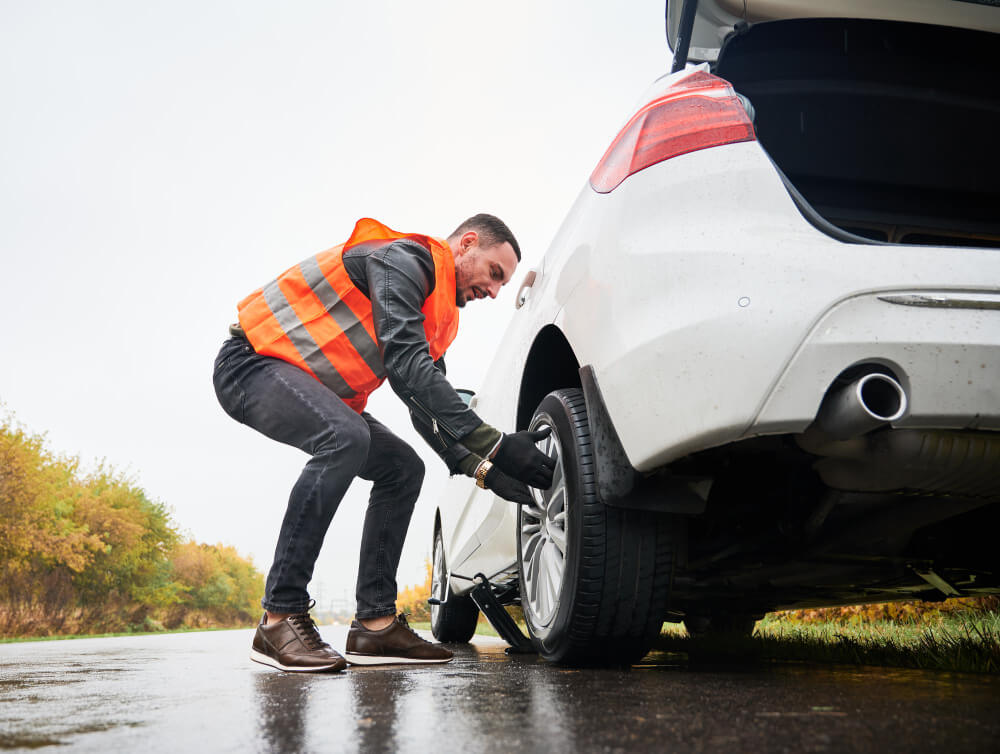
Waking up to a low or completely flat tire is frustrating, and it can feel mysterious when the car looked fine the night before. If you’re searching for why tires go flat overnight, the short answer is: most overnight flats come from a slow leak that finally dropped below a usable pressure, not a sudden “random” failure. This guide will help you narrow down the cause safely, figure out whether the car can be moved, and understand what typically needs repair. If you’re stuck in Houston and need a mobile tire help option, Bliss Towing Services is one contact to keep handy at 281-849-9991.
Before you do anything else, confirm what “flat” means. Sometimes a tire looks low but still has enough air to roll a short distance slowly, and other times it is truly at or near zero pressure.
If you have a tire pressure gauge, check the pressure on the problem tire and compare it to the other tires. If you do not have a gauge, look closely at how much the sidewall is bulging where it meets the ground. A tire that is heavily squashed at the bottom is not safe to drive on.
Next, do a quick visual check. Look for a nail or screw in the tread, a cut in the sidewall, or a tire that has separated from the wheel. Also look around the ground where the tire sits. If you see a fresh puddle near the wheel area, that is likely water from condensation or the A/C system if it ran recently, not a tire issue, but it is still worth noting anything unusual.
If the tire is very low, do not “just roll it” to a better spot unless you truly have no alternative and the distance is extremely short. Driving even a short distance on a nearly flat tire can destroy the sidewall, which can turn a repairable puncture into a full tire replacement. It can also damage the wheel.
If you have a spare tire and you know how to install it safely, that may be your best option. If you do not have a spare, the spare is also low, or the car is in a place where changing a tire is risky, it’s usually smarter to get help rather than gamble with wheel and tire damage.
Most overnight air loss comes from one of a handful of leak paths. The “right” fix depends on where the air is escaping.
A nail or screw in the tread is one of the most common culprits. If the object stays lodged in the tire, it can act like a plug for a while, leaking slowly. Overnight, a slow leak can drop the tire enough to look flat in the morning.
Valve stem leaks are another frequent reason. The valve stem is the small rubber and metal part where you add air. The rubber can crack with age, or the valve core inside can loosen slightly. Even a missing or damaged valve cap can contribute to slow leaks because the cap helps keep dirt and moisture out of the valve core area.
Bead leaks happen where the tire meets the rim. Corrosion, dirt, old tire sealant, or a slightly bent wheel can keep the bead from sealing perfectly. Bead leaks often show up as a tire that needs air every few days, but in some cases, especially after hitting a curb or pothole, it can drop significantly overnight.
Wheel or rim damage is another possibility. A hard impact can crack a wheel or bend it enough to create a leak at the bead. Some cracks leak slowly and only show under certain conditions, so the tire might hold air during the day and drop overnight when the car is parked and the leak has time to work.
A slow leak can also come from an old repair. A patch or plug that was done poorly, or done in a location that isn’t ideal, may start leaking later. This is one reason it’s important that repairs follow standard safe practices, not just “whatever stops the leak today.”
Finally, temperature changes can lower tire pressure, but they usually do not cause a tire to go truly flat overnight. As temperatures drop, the air in the tire contracts and pressure readings fall. That can trigger a tire pressure warning light or make a tire look slightly low. If a tire is visibly flat, you’re almost certainly dealing with a leak, not just a normal pressure change.
You can often narrow down the leak location without specialized tools. The goal is to identify whether this looks like a simple tread puncture, a valve issue, or something more complex like a bead or wheel problem.
A simple soap-and-water mix can reveal escaping air by forming bubbles. You can use dish soap and water in a spray bottle, or apply soapy water with a sponge.
Spray or apply it to three main areas: the valve stem, the tread where you suspect an object, and the bead area where the tire meets the wheel on both sides if you can access them. If you see steady bubbling in one spot, that’s a strong clue. Tiny bubbles that grow slowly suggest a slow leak, while aggressive bubbling suggests a larger leak.
If you suspect a puncture but can’t find it, roll the car slightly, if the tire still has some air and it’s safe to do so, to expose more of the tread. Do not do this if the tire is fully flat and you’ll grind the sidewall.
Run your eyes over the tread for shiny metal or a dark spot that looks like a screw head. Check the sidewall carefully for cuts, bulges, or bubbles. A bulge on the sidewall can be a sign of internal damage, and it’s not something to ignore.
At the valve stem, look for cracks in the rubber and make sure the stem is not bent or loose. If you have valve caps, confirm they are present and not damaged. A missing cap alone does not guarantee a leak, but it can contribute over time.
In a quiet driveway, you may hear a hiss near the leak. Move your ear around the valve area and tread carefully. If you find a nail or screw, note its location, but resist the urge to pull it out immediately.
When people are late for work or trying to avoid a hassle, a few decisions can turn a manageable problem into an expensive one.
The biggest mistake is pulling out a nail or screw before you’re ready. If the object is still in place, it may be slowing the leak. Removing it can cause the tire to deflate rapidly, and it can make it harder to move the vehicle safely or get it positioned for repair.
Another mistake is overinflating a leaking tire to “make it home.” Adding air can be a temporary step to move the vehicle a short distance, but inflating beyond the pressure listed on the driver’s door jamb is risky. If the tire has damage you cannot see, extra pressure can increase the chance of a failure.
Driving on a low tire is also a common way people destroy a tire that could have been repaired. The sidewall flexes excessively when pressure is low, builds heat, and can be permanently damaged. Once the sidewall is compromised, many tires are no longer safe to repair even if the original puncture was small.
Whether a tire can be repaired depends mainly on the location and type of damage. In general, shops look for punctures in the tread area, not the sidewall. Sidewall punctures and many shoulder-area punctures are often replacement situations because repairs there may not be considered safe.
Shops also consider the size of the puncture and whether the tire was driven while flat. A tire that was driven at very low pressure may have hidden internal damage. Even if a plug seems to hold air, the tire could fail later.
Sometimes the tire is fine and the wheel is the issue. If bubbles show up along the rim edge or you see a bent lip, the wheel may need attention. In that case, repeatedly patching the tire won’t solve the underlying problem.
Overnight flats aren’t always preventable, but you can reduce the odds. Make a habit of checking tire pressures periodically, especially before long drives. Keep valve caps installed, since they protect the valve core from debris and moisture. Stay on a regular tire rotation schedule so wear stays even, which can help you spot slow leaks, punctures, or developing tire issues earlier. Try to avoid curb impacts when parking and take potholes seriously, since a hard hit can damage both the tire and the wheel.
If your tires are aging or you see dry cracking around the sidewall, it’s worth having them inspected. The same goes for valve stems on older tires. Rubber components don’t last forever, and small leaks often start there.
If you’ve been wondering why tires go flat overnight, the most likely answer is a slow leak from a tread puncture, valve stem issue, bead leak, or wheel damage that finally dropped the tire pressure enough to show up in the morning. A quick pressure check, a careful visual inspection, and a soap-and-water bubble test can often point you toward the source, and it helps you decide whether the car can be moved safely.
If you’re in Houston and the tire is too low to drive on, the spare isn’t usable, or you simply want help handled safely, you can contact Bliss Towing Services at 281-849-9991. We can help you get the situation under control without turning a small leak into a bigger repair.