Driving is a necessity but it can also be an enjoyable experience not until you experience something terrible while on the road. No one is really 100% prepared for a car accident. It comes as a surprise and sometimes the damage is severe that you need a accident towing service. It’s a scenario no one wants to experience, but unfortunately, it happens all too often.
At Bliss Towing Services Houston, we understand the stress and frustration that comes with being involved in a daytime car accident. That’s why we’ve compiled this list of the top 10 daytime driving tips to help you avoid needing our car accident towing services. By following these tips, you can help keep yourself, your passengers, and other drivers safe on the road.
If you do find yourself in need of car accident towing, remember that Bliss Towing Services Houston is here to help. Just give us a call at 281-849-9991, and we’ll be there to assist you.
Wearing your seatbelt is one of the simplest and most effective ways to protect yourself in the event of a car accident. According to the National Highway Traffic Safety Administration (NHTSA), 50% of the 25,420 killed passenger occupants were not wearing seatbelts. By buckling up, you can significantly reduce your risk of serious injury or death in a crash.
In most states, wearing a seatbelt is not just a smart choice – it’s the law. Law enforcement officers actively enforce seatbelt laws through campaigns like “Click It or Ticket,” which aims to increase seatbelt use through education and enforcement. By always wearing your seatbelt, you can avoid costly tickets and, more importantly, protect yourself from the devastating consequences of a car accident.
One of the most common causes of daytime car accidents is following too closely behind another vehicle. To avoid this, practice the 3-second rule: choose a fixed point on the road ahead, such as a sign or overpass. When the vehicle in front of you passes that point, count “one-one thousand, two-one thousand, three-one thousand.” If you reach the fixed point before finishing the count, you’re following too closely and should back off.
While the 3-second rule is a good starting point, it’s important to remember that you may need to increase your following distance depending on weather and road conditions. In rain, fog, or other adverse conditions, double or even triple your following distance to give yourself plenty of time to react if the vehicle in front of you stops suddenly.
In today’s fast-paced world, it’s easy to get distracted while behind the wheel. Whether it’s answering a text message, fiddling with the radio, or eating on the go, taking your eyes off the road for even a few seconds can have devastating consequences. According to the NHTSA, distracted driving claimed 3,308 lives in 2022 alone.
To avoid becoming a distracted driving statistic, make a conscious effort to minimize distractions while behind the wheel. Put your phone on silent or use a hands-free device if you must take a call. If you’re feeling hungry, pull over to eat rather than trying to multitask while driving. By keeping your focus on the road, you’ll be better prepared to react to any unexpected situations that may arise.
Regular vehicle maintenance isn’t just about keeping your car looking and running its best – it’s also a key component of accident prevention. By keeping your vehicle in good working order, you can reduce the risk of mechanical failures that could lead to a crash.
Some of the most important maintenance tasks to keep up with include:
By staying on top of these tasks, you can help ensure that your vehicle is always ready to perform when you need it most.
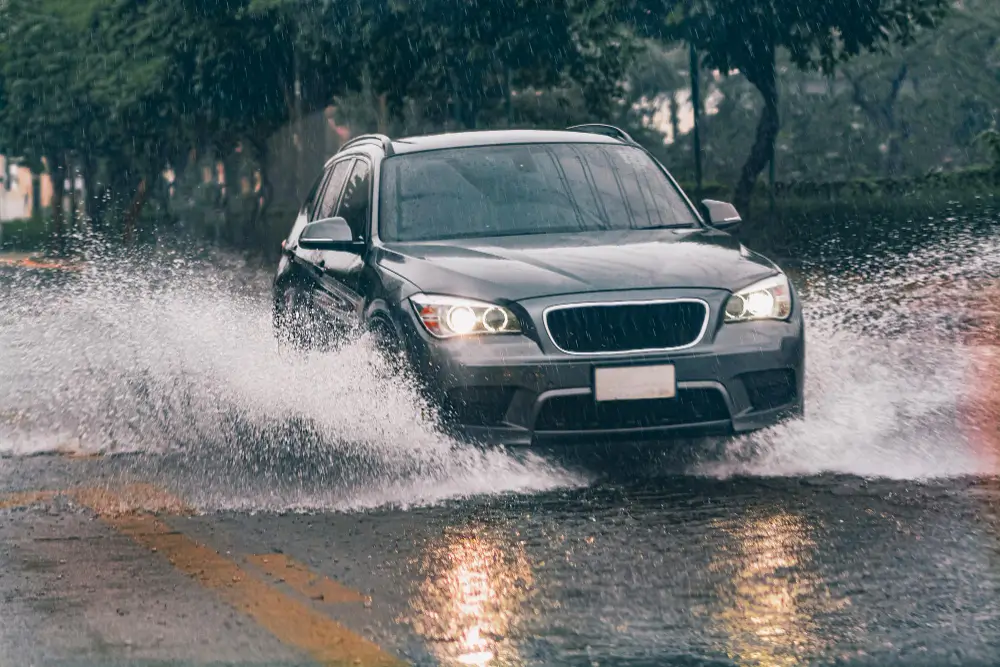
Daytime driving conditions can change rapidly, especially during spring and summer when pop-up showers and thunderstorms are common. When driving in rain, fog, or other adverse conditions, it’s important to adjust your driving accordingly.
Some tips for safe driving in bad weather include:
By adapting your driving to the conditions at hand, you can help reduce the risk of a weather-related accident.
One of the most important ways to prevent accidents is by communicating your intentions to other drivers. Using your turn signals consistently and correctly is a simple but effective way to let others know what you’re planning to do.
According to a study by the Society of Automotive Engineers, failure to use turn signals causes around 2 million accidents per year in the United States. By always using your turn signals when changing lanes or turning, you can help prevent these types of accidents and keep yourself and others safe on the road.
Intersections are one of the most common sites of daytime car accidents. With vehicles entering from multiple directions and pedestrians often present, there’s a lot to keep track of when navigating an intersection.
To reduce the risk of an intersection accident, always approach with caution and be prepared to stop. Check for cross-traffic before proceeding, even if you have a green light. If you’re turning, yield to oncoming traffic and pedestrians before completing your turn. By taking a few extra seconds to assess the situation, you can help prevent a potentially serious accident.
Speeding is a major contributor to both the frequency and severity of car accidents. According to the NHTSA, speeding was a factor in 29% of all fatal crashes in 2022, claiming 12,151 lives.
To avoid becoming a speeding statistic, always observe posted speed limits and adjust your speed based on road and traffic conditions. In heavy traffic, construction zones, or other areas where extra caution is warranted, slow down even further to give yourself plenty of time to react to any unexpected situations.
Being aware of your surroundings is key to anticipating and avoiding potential accidents. This means regularly checking your mirrors and blind spots, as well as keeping an eye out for pedestrians, cyclists, and other road users who may not always be immediately visible.
In addition to being aware of your own surroundings, it’s important to try to anticipate the actions of other drivers. This might mean giving a wide berth to a driver who seems to be distracted or erratic, or being prepared to stop suddenly if a pedestrian looks like they might step into the road. By staying alert and anticipating potential hazards, you can help keep yourself and others safe.
Long daytime drives can be especially tiring, leading to a condition known as drowsy driving. According to the NHTSA, drowsy driving claimed 684 lives in 2021, and the actual number may be even higher due to underreporting.
To avoid the dangers of drowsy driving, it’s important to take regular breaks on long daytime trips. Plan to stop every couple of hours to stretch your legs, get some fresh air, and maybe even take a quick nap if you’re feeling especially tired. By giving yourself time to rest and recharge, you can help ensure that you’re always alert and focused behind the wheel.
By following these top 10 daytime driving tips, you can significantly reduce your risk of being involved in a car accident and needing car accident towing services. Remember, safe driving is a responsibility that we all share whether its day or night. By making a commitment to always wear your seatbelt, maintain a safe following distance, avoid distractions, and follow the other tips outlined here, you can help keep yourself and others safe on the road.
If you do find yourself in need of car accident towing, know that Bliss Towing Services Houston is here to help. Our experienced and professional team is available 24/7 to provide the assistance you need. Just give us a call at 281-849-9991, and we’ll be there to help you get back on the road as quickly and safely as possible.